

Meet The Masters is an Interactive Multi-Media Art Education Based on the Lives and Works of the Master Artists. Your Homeschool students learn Art by studying the greats: Van Gogh, Picasso, Monet, Degas, Rembrandt, and MANY, MANY MORE!
Meet The Masters uses a 3-step learning approach:
* Art History - This interactive step contains audio clips of the master artist's themselves, period music, and fun review games with Pierre (our friendly French companion), all designed to capture the attention and imagination of home schooled children.
* Art Technique - Your students will learn to implement the art principles that correspond with the artist they have just been introduced to with the downloadable Art technique packets. These are available within the program in .pdf format for you to print, as needed.
* Art Activity - Your students will then move on to use the techniques and styles of the Masters to create their very own masterpieces using our step-by-step instructions. As they progress through the program, the children develop their own unique artist style and art portfolio! This Group Buy offers something for every artist at every age level -- ALL at Group Buy savings!
Homeschooling: German Family Gets Political Asylum in U.S.
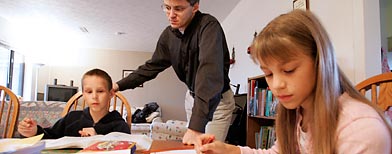 READ Yahoo! News: "The Romeikes are not your typical asylum seekers. They did not come to the U.S. to flee war or despotism in their native land. No, these music teachers left Germany because they didn't like what their children were learning in public school - and because homeschooling is illegal there. (See pictures of a Tennessee family homeschooling its children.)
'It's our fundamental right to decide how we want to teach our children,' says Uwe Romeike, an Evangelical Christian and a concert pianist who sold his treasured Steinway to help pay for the move.
Romeike decided to uproot his family in 2008 after he and his wife had accrued about $10,000 in fines for homeschooling their three oldest children and police had turned up at their doorstep and escorted them to school. 'My kids were crying, but nobody seemed to care,' Romeike says of the incident. (See pictures of a diverse group of American teens.)
So why did he seek asylum in the U.S. rather than relocate to nearby Austria or another European country that allows homeschooling? Romeike's wife Hannelore tells TIME the family was contacted by the Virginia-based Home School Legal Defense Association (HSLDA), which suggested they go to the U.S. and settle in Morristown, Tenn. The nonprofit organization, which defends the rights of the U.S. homeschooling community - with its estimated 2 million children, or about 4% of the total school-age population - is expanding its overseas outreach. And on Jan. 26, the HSLDA helped the Romeikes become the first people granted asylum in the U.S. because they were persecuted for homeschooling. (See pictures of East Germany making light of its past.)
The ruling is tricky politically for Washington and its allies in Europe, where several countries - including Spain and the Netherlands - allow homeschooling only under exceptional circumstances, such as when a child is extremely ill. That helps explain why in late February, U.S. Immigration and Customs Enforcement formally appealed the Romeike ruling, which was issued by an immigration judge in Memphis, Tenn. His unprecedented decision has raised concerns that the already heavily backlogged immigration courts will be flooded with asylum petitions from homeschoolers in countries typically regarded as having nonrepressive governments. (Comment on this story.)"

13 Careers for the Next Decade
13-careers-for-the-next-decade: Personal Finance News from Yahoo! Finance: "We offer a baker's dozen of professions that promise income growth, work-life balance and social impact.
Few decisions are more important than choosing a career. And especially in these uncertain and changing times, no decision may be more difficult.
U.S. companies, saddled with increasingly onerous costs of employing people, are downsizing, cutting employees' hours, hiring temps, automating jobs and sending work offshore. Meanwhile, technology is redefining existing jobs and demanding new skills from an aging workforce, and new competition for jobs looms in the form of 12 to 20 million illegal immigrants likely to get legalized in the years ahead. Perhaps most potent, the U.S. is experiencing the largest transfer of gross domestic product from the private sector to the government sector in history -- and shifting jobs along with it.
In these roiling times, what are smart career choices? Of course, the best career for one person can be the worst for another, but I believe these 13 are particularly worthy of attention. From among thousands of occupations, I selected the 13 that rank best overall based on these criteria:
• Likelihood of Sustaining at Least a Middle-Class Income. This subsumes three factors: likely job growth, income potential and being under the radar (so there's less competition for jobs).
• Socially Redeeming. There may be jobs, for example, as casino managers and tobacco executives, but such occupations were immediately excluded from consideration.
• Quality of Life. Reasonable work hours, freedom from toxic or noisy work environments, and so on.
• Status. Most Kiplinger readers will not, for example, be attracted to owning gas stations, even though some gas-station owners make a great deal of money."
Few decisions are more important than choosing a career. And especially in these uncertain and changing times, no decision may be more difficult.
U.S. companies, saddled with increasingly onerous costs of employing people, are downsizing, cutting employees' hours, hiring temps, automating jobs and sending work offshore. Meanwhile, technology is redefining existing jobs and demanding new skills from an aging workforce, and new competition for jobs looms in the form of 12 to 20 million illegal immigrants likely to get legalized in the years ahead. Perhaps most potent, the U.S. is experiencing the largest transfer of gross domestic product from the private sector to the government sector in history -- and shifting jobs along with it.
In these roiling times, what are smart career choices? Of course, the best career for one person can be the worst for another, but I believe these 13 are particularly worthy of attention. From among thousands of occupations, I selected the 13 that rank best overall based on these criteria:
• Likelihood of Sustaining at Least a Middle-Class Income. This subsumes three factors: likely job growth, income potential and being under the radar (so there's less competition for jobs).
• Socially Redeeming. There may be jobs, for example, as casino managers and tobacco executives, but such occupations were immediately excluded from consideration.
• Quality of Life. Reasonable work hours, freedom from toxic or noisy work environments, and so on.
• Status. Most Kiplinger readers will not, for example, be attracted to owning gas stations, even though some gas-station owners make a great deal of money."
Studies Reveal Why Kids Get Bullied and Rejected
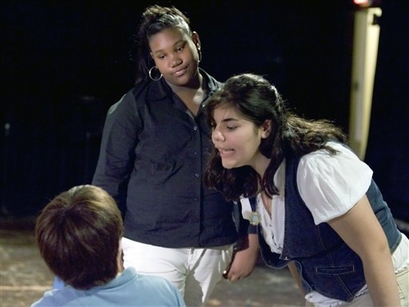 CLICK to read the whole article: "Kids who get bullied and snubbed by peers may be more likely to have problems in other parts of their lives, past studies have shown. And now researchers have found at least three factors in a child's behavior that can lead to social rejection.
The factors involve a child's inability to pick up on and respond to nonverbal cues from their pals.
In the United States, 10 to 13 percent of school-age kids experience some form of rejection by their peers. In addition to causing mental health problems, bullying and social isolation can increase the likelihood a child will get poor grades, drop out of school, or develop substance abuse problems, the researchers say.
'It really is an under-addressed public health issue,' said lead researcher Clark McKown of the Rush Neurobehavioral Center in Chicago.
And the social skills children gain on the playground or elsewhere could show up later in life, according to Richard Lavoie, an expert in child social behavior who was not involved with the study. Unstructured playtime - that is, when children interact without the guidance of an authority figure - is when children experiment with the relationship styles they will have as adults, he said.
Underlying all of this: 'The number one need of any human is to be liked by other humans,' Lavoie told LiveScience. 'But our kids are like strangers in their own land.' They don't understand the basic rules of operating in society and their mistakes are usually unintentional, he said."
The great Baby Einstein scam
 By Parenting on Shine
"Of course it was too good to be true.
The New York Times reported Thursday that Disney is offering a refund to buyers of its ubiquitous “Baby Einstein” videos, which did not, as promised, turn babies into wunderkinds. Apparently, all those puppets, bright colors, and songs were what we had feared all along—a mind-numbing way to occupy infants.
This news has rocked the parenting world, which had embraced the videos as a miraculous child-rearing staple. Videos that make your kid smarter while you prepare dinner? Genius!
Or not. According to the article, the American Academy of Pediatrics recommends that children under two years old stay away from watching screens. In the letter threatening Disney with a class-action lawsuit for 'deceptive advertising,' public health lawyers hired by Campaign for a Commercial-Free Childhood cited a study which found a link between early television exposure and later problems with attention span.
For many parents, this was the most unsettling of 'duh' moments, and a confirmation that nothing, when it comes to child-rearing, is as ever easy as we'd like to make it. So why were we so quick to seize on Baby Einstein videos as technological tutors?
Call it the perfect storm of parenting. Who doesn’t want to believe that there is a magical, wondrous, no-parental-guidance-required product that will turn their kids into Mensa members? The combination of our lack of time, our paranoia over our kids performance, and our faith in technology primed this generation of parents to accept the clever advertising around 'Baby Einstein' as truth, just as parents before us have seized on corporal punishment, or the teachings of Dr. Spock.
Still, the idea that a caper this big could be pulled off (according to the Times, in “a 2003 study, a third of all American babies from 6 months to 2 years old had at least one 'Baby Einstein' video') is mind-boggling. Disney’s refund is about as close as we’re going to get to an actual admission that we were sold snake oil, and it casts a pall over the other 'educational' toys out there."

