Rss Feed
Showing posts with label socialization. Show all posts

'Tiger Mom' comes to China

'Tiger Mom' comes to China

BEIJING—The school term may be

coming to a close for summer, but education remains a hot topic.

At least that’s the way the China Timessees it.

The Taiwan-based newspaper invited Amy Chua, author of the controversialBattle Hymn of the Tiger Mother, to Beijing for several public speaking engagements earlier this week.

“She uses the Chinese way to educate her kids, and it’s very successful,” said Shao Jian Biao, the deputy editor in chief atChina Times. “But parents here in China have been trying the western way, because they thought it was better. A lot of parents are confused.”

East or West?
Monday morning saw a small group of Chinese reporters—all of them female—turn up a hotel business center, eager to get Chua to expound on her views on raising children.

“I’m a mother, and I read her book very carefully,” said Shen Feng Li, Vice Director of Shanghai Morning Post. “In China, we pay a lot of attention to education.”

At a corporate gathering in another hotel, the audience was again largely female. “I have a little boy, and I read her book. I agreed with it,” said a stylishly-dressed executive who did not want to give her name.

For any parent who might have been living under a rock this year, Chua’s book was excerpted in theWall Street Journal in January with a headline that served as a wake-up call (of sorts) to Americans already anxious about a rising China: “Why Chinese Mothers Are Superior.”

As it turned out, her book isn’t really about how the Chinese make better parents. It’s a much more personal account of the challenges facing a mother wanting to the very best for her children.

“I actually wrote this book in a moment of crisis, when my younger daughter, Lulu, turned 13, became a teenager, and rebelled against my very strict parenting,” Chua explained.

In fact, Chua took great pains to set the record straight.

As home-schooling moves to mainstream, stigma fades

CLICK to read article on TODAYshow.com

"Evidence suggests that home-schooling in America is a growing trend. In a weeklong web-only series, TODAYshow.com reports on the challenges and creative opportunities presented by this approach to education.

Fifteen-year-old Tess Rodrigues is a typical teenager: She spends her free time at the mall, hangs out with friends and stays connected on Facebook.

But unlike most 10th-graders, Tess is home-schooled by her mother, and supplements her studies in marine biology, Spanish and world history with help from a weekly home-school co-op group.

“My mom and I laugh a lot and have fun,” Tess said. “And with the work, I get to go at my own pace, unlike a regular classroom. I can speed through lessons that are easy, and take time to go over things if I don’t get them.”

Her mother, Lisa Landis Rodrigues, started home-schooling her three children when they were in second, fourth and fifth grade.

“I’m not anti-school at all — I think teachers are awesome and I think most schools are great,” said the Rhode Island mom. “But morally, I think they go way too fast. I wanted my 10-year-old to be a 10-year-old, not get caught up in how other kids dress and act, so I decided to home-school them.”

Though such students represent an estimated 3 percent of the population, evidence suggests that home-schooling is a growing trend in America. While most say faith is their primary motivation, others choose this path for a variety of reasons that include dissatisfaction with the local school system, caring for special-needs kids, safety concerns, flexibility to travel and the chance to spend more time with their children.

- Sent using Google Toolbar"

Home Where They Belong — What About Socialization?

CLICK link for more.

"If you’re a homeschooler or are even just thinking about homeschooling, I’m sure you’ve heard it. It’s the perennial favorite question asked by those who do not homeschool.

But what about socialization?

Aside from the fact that the vast majority of homeschoolers spend plenty of time around people of a variety of ages, in many different settings, and have proven themselves able to function quite well in the “real world”, do we really want the world’s socialization anyway?

This article, entitled Youth Violence Linked to Unsupervised Socializing, presents a scary picture of what can happen among teens who “socialize” on their own. This trend was even noticed in so-called “good” neighborhoods with “A” students.

If violence is one of the results of “socialization“, I don’t mind at all if my family is “unsocialized“.

- Sent using Google Toolbar"

Boys may benefit from aggressive play

Bring it: Boys may benefit from aggressive play - Health - Kids and parenting - msnbc.com

"In her 30 years as a kindergarten teacher in Illinois and Massachusetts, Jane Katch has watched graham crackers, a pretzel, celery, tree bark and fingers all become transformed into imaginary guns and other weapons. And she has learned to work with, rather than against, the violent boyhood fantasies that accompany these transformations.

'When you try to ignore it, it doesn't go away. And when you try to oppress it, it comes out in sneaky ways,' Katch said.

Not every teacher agrees. Schools have become battlegrounds between the adults who are repelled by the play violence they see and the children — primarily boys — who are obsessed with pretending to fight, capture, rescue and kill.

While some educators prohibit this behavior, other educators and researchers claim that banishing violent play from classrooms can be harmful to boys. It's a debate entangled in gender issues, since nearly all early-childhood educators are women, and they may be less comfortable than their male counterparts with boys' impulses.

While this behavior has been around far longer than toy guns and superhero movies — boys appear to be hard-wired for more active and aggressive pursuits than girls — many adults see this aggressive play being fueled by the violence portrayed or reported in the media.

- Sent using Google Toolbar"

Studies Reveal Why Kids Get Bullied and Rejected

CLICK to read the whole article: "Kids who get bullied and snubbed by peers may be more likely to have problems in other parts of their lives, past studies have shown. And now researchers have found at least three factors in a child's behavior that can lead to social rejection.

The factors involve a child's inability to pick up on and respond to nonverbal cues from their pals.

In the United States, 10 to 13 percent of school-age kids experience some form of rejection by their peers. In addition to causing mental health problems, bullying and social isolation can increase the likelihood a child will get poor grades, drop out of school, or develop substance abuse problems, the researchers say.

'It really is an under-addressed public health issue,' said lead researcher Clark McKown of the Rush Neurobehavioral Center in Chicago.

And the social skills children gain on the playground or elsewhere could show up later in life, according to Richard Lavoie, an expert in child social behavior who was not involved with the study. Unstructured playtime - that is, when children interact without the guidance of an authority figure - is when children experiment with the relationship styles they will have as adults, he said.

Underlying all of this: 'The number one need of any human is to be liked by other humans,' Lavoie told LiveScience. 'But our kids are like strangers in their own land.' They don't understand the basic rules of operating in society and their mistakes are usually unintentional, he said."

The great Baby Einstein scam

By Parenting on Shine

"Of course it was too good to be true.

The New York Times reported Thursday that Disney is offering a refund to buyers of its ubiquitous “Baby Einstein” videos, which did not, as promised, turn babies into wunderkinds. Apparently, all those puppets, bright colors, and songs were what we had feared all along—a mind-numbing way to occupy infants.

This news has rocked the parenting world, which had embraced the videos as a miraculous child-rearing staple. Videos that make your kid smarter while you prepare dinner? Genius!

Or not. According to the article, the American Academy of Pediatrics recommends that children under two years old stay away from watching screens. In the letter threatening Disney with a class-action lawsuit for 'deceptive advertising,' public health lawyers hired by Campaign for a Commercial-Free Childhood cited a study which found a link between early television exposure and later problems with attention span.

For many parents, this was the most unsettling of 'duh' moments, and a confirmation that nothing, when it comes to child-rearing, is as ever easy as we'd like to make it. So why were we so quick to seize on Baby Einstein videos as technological tutors?

Call it the perfect storm of parenting. Who doesn’t want to believe that there is a magical, wondrous, no-parental-guidance-required product that will turn their kids into Mensa members? The combination of our lack of time, our paranoia over our kids performance, and our faith in technology primed this generation of parents to accept the clever advertising around 'Baby Einstein' as truth, just as parents before us have seized on corporal punishment, or the teachings of Dr. Spock.

Still, the idea that a caper this big could be pulled off (according to the Times, in “a 2003 study, a third of all American babies from 6 months to 2 years old had at least one 'Baby Einstein' video') is mind-boggling. Disney’s refund is about as close as we’re going to get to an actual admission that we were sold snake oil, and it casts a pall over the other 'educational' toys out there."

Bill Cosby: Listen To Your Children

This Sunday (9/20/2009 @ 7PM EST) on MSNBC, Bill Cosby will be leading a series of townhall meetings entitled, "About Our Children." This really looks good. Don't miss it.

VIDEO: How To Neutralize Mean Girls

I think this video has really good and "doable" advise for girls who encounter those "mean girls." Even homeschoolers run into them...video is well-done.

Homeschoolers hit the gridiron for first time in New Orleans

By Mike Hoss / Eyewitness News wwltv.com (CLICK to read more)

"John Burke is a 13-year-old eighth grader who has been homeschooled his entire life. And he loves football, but as a homeschooler, there wasn't a team.
Video: Watch the Story

So his dad made him an offer.

'He said that he would put me into school so I could play high school football,” John Burke said. “I felt it was a strange idea.”

That's not a problem anymore. Now there is the home school Saints, New Orleans' first tackle football team made up entirely of homeschool kids. Thursday was just their second time in action.

“Yeah it’s exciting, I love football in general and the adrenaline rush of being able to go onto the football field after never being able to play,” said player Sam Mauras. “Its just exhilarating to go out and represent New Orleans.”"

VIDEO: Myths About Homeschoolers


Hilarious YouTube video put together by a couple homeschooled young ladies; very clever and entertaining AND definitely makes a good point! Nice job.

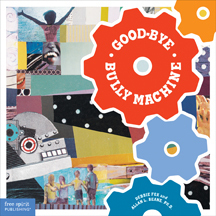
New Book Helps Kids Stop the Bully Machine

New Book Helps Kids Stop the Bully Machine: "Parents, teachers, and other caring adults believe that kids deserve to feel safe, secure, accepted, and valued, whether at home or at school. Yet every day too many kids are being teased, called names, harassed, or threatened--or worse. To the kids being bullied, it can feel like a powerful machine has taken control of their lives: the Bully Machine.

GOOD-BYE BULLY MACHINE by Debbie Fox and Allan L. Beane, Ph.D., (Free Spirit Publishing, $6.99 softcover, $12.99 hardcover) was written to teach kids ages 8 and up what bullying is, why it hurts, and what they can do to put a stop to it. Part of the Bully Free Classroom™ line of resources, GOOD-BYE BULLY MACHINE engages kids with clear messages and unique collage art."

How to "Socialize" Your Homeschooled Children

How to "Socialize" Your Homeschooled Children | eHow.com: "What exactly is 'socialization'? According to the Mirriam-Webster online dictionary, it is the transitive verb that means '1. to make social; to fit or to train for a social environment. 2a: to constitute on a socialistic basis b: to adapt to social needs or uses 3: to organize group participation.' So, let us address this concern regarding socializing homeschooled children, in steps to ensure that they are indeed 'socialized' properly."

VILLAGE VOICE: For Some Black Parents, the New Home Room is Home by Chloe A. Hilliard

For Some Black Parents, the New Home Room is Home by Chloe A. Hilliard: "Public schools are failing black boys, say a growing number of parents who are homeschooling"

What I Like About Homeschooling

This was posted on YouTube by a homeschooled student named "grandmasterzel." VERY well-done...good job.

This is what she wrote about it:

"This is my submission to Laurel Springs' What's Cool About Homeschool contest. It was written, drawn and animated by me, Hazel Newlevant (age 15). The background music is Watchman's Song, by Edvard Greig, performed by me. It is under the public domain."

What Does Back to School Mean for Homeschoolers

By JONANN BRADY
Aug. 30, 2005

Many Who Teach Their Kids at Home Say They Aren't Missing Out

For most, "back to school" season conjures up vivid memories: a fresh notebook, the carefully chosen first-day outfit, sizing up the teacher, seeing friends, and figuring out where you stand in the new classroom pecking order.

But what about the increasing number of children being educated at home? The U.S. Department of Education estimates there were 1.1 million home-schooled kids in 2003, and the numbers have been steadily growing.

Are these kids being deprived of a uniquely American rite of passage? Not necessarily, say many involved in the movement.

Happy to Be Learning at Home

Like the other home-schooled kids interviewed for this story, 14-year-old Ava Lowrey has no desire to go back to public school.

"I don't miss it," she said. "I enjoy working at my own pace. In public school, you're not able to do that."

Ava's mother, Tamara Knowles, of Alexander City, Ala., began home-schooling both of her children when they were in seventh grade, primarily because she wanted them to get a higher-quality education than she felt they could get at the local public school.

Knowles, 36, was herself home-schooled at a time when it was virtually unheard of. Her father was an Assembly of God minister and the family moved frequently.

When she was ready to enter 10th grade, Knowles decided to go back to public school. By the time she was entering her senior year, though, she was ready to return home. "I felt like I was spinning my wheels and wasting my time," she said.

But Knowles said her kids are free to go back to school anytime. "The option is open to my kids. I don't think public school is evil," she said.

Do Public Schools Teach Democracy?

The common perception of home-schooling families is that they are conservative Christians trying to escape secularism in public schools, but Knowles said the opposite was true for her family.

"In the South, the political atmosphere is very conservative," Knowles said. "There were times when public school teachers would make a lot of political comments that made me uncomfortable."

Dr. Michael Apple, a professor of educational policy at the University of Wisconsin-Madison who has studied home schooling extensively, says that secular home-schoolers like Knowles and her kids are a growing population, but still a tiny group.

But whether home-schoolers are evangelical Christian conservatives or secular and liberal, Apple believes home-schoolers are cutting themselves off from people with different beliefs and backgrounds.

Home-schooled kids, he says, are missing out on the more subtle lessons that public schools teach students about being American citizens and interacting in a diverse society.

"Public schools are important to democracy," Apple said. "They teach people how to work with others across political, religious, class and racial lines. It would be a disaster to give up on that."

Or Does Home Schooling Teach Acceptance?

Laura Derricks, president of the National Home Education Network -- and other home-schoolers -- insist they are enriching their children's social lives, not cutting them off from the outside world.

The home-schooled kids interviewed for this story said they have many friends and plenty of activities to keep them busy. And far from feeling left out or cut off, they say they have a richer social life than most of their peers.

With home schooling becoming more popular, families are building networks to socialize and share information. Around Austin, Texas, where Derricks and her family live, there are hundreds of home-schooling families. Her kids, 14-year-old Jackson and 11-year-old Sarah, are involved in a number of organized group activities such as gymnastics, drama and city parks programs.

Derricks said the "comparing, grading and sorting" that is the hallmark of public schools can be damaging to kids. "Kids pick up on it," she said. "They know who is the best in the class and who has the money. They take that to heart and learn that really well."

Because there is less social pressure on home-schooled kids, they are more accepting of their peers, Derricks said.

"With home schooling, there's not the same pecking order," she said. "Participation is based on interests. It's multi-age, and association is voluntary. There's a wider range of what's accepted."

Avoiding the 'Lord of the Flies'

In one way or another, home-schooling parents believe they can provide a better, healthier environment for learning than public or parochial schools can.

Julieanne Hensley, of Cincinnati, says she decided to home-school her children precisely because of the kind of socialization they would get in school.

Hensley went to Catholic school and said her studious, bookworm personality made her "bully bait."

"It's like 'Lord of the Flies,'" Hensley said of the social life at traditional schools. "The idea that kids have to deal with bullies is absurd. Adults don't have to in their lives."

Tamara Knowles agreed, saying that, in many cases, public schooling can tear down a child's self-esteem. "It happened to me," she said. "Other kids will taunt you, tease you. That socialization is not good -- it's group think. If you're different, and I hope my kids are, you're going to get a lot of that."

Barbara Theesfeld, of Williams Bay, Wis., never intended to be a home-schooling mom. "I used to think home schooling was for the birds," said Theesfeld.

But she took her two kids out of public school when her son, Jimmy, now 17, was in fourth grade, because he was being picked on constantly, she said.

"I felt like he was falling apart," Theesfeld said. "A school district's hands are tied in many ways when a child is being bullied."

Even though he is critical of home schooling, Apple, the education policy professor, says the movement is clearly a "wake-up call" for public schools.

"Public schools have to be closer to the community and more responsive to parents and kids," he said.

Proms, Dances and More

But like many home-schooling families, the Theesfeld family has had to endure other people's curiosity -- often bordering on disdain -- about their choice. Many people wonder how hom-eschooling families can deprive their kids of all the important touchstones that school seems to provide.

"The first thing my relatives said when they found out was, 'Well, they'll never go to a prom or a football game,'" Theesfeld said. "Someone was concerned he [Jimmy] wouldn't have a locker. I mean, I don't miss my locker from high school."

It's an issue that comes up frequently with home-schooling families: How will your kids ever learn socialization skills if they don't go to regular school?

It's a question many of these families find a little silly. As Theesfeld said, "We're not isolated, with barbed wire around our house."

And groups of home-schooling families are making sure that their kids aren't missing out on important adolescent rituals.

Every year in Austin on the first day of regular school, home-schooling families throw a giant "Not Back to School" party at a city swimming pool. And in the fall, they organize dances attended by hundreds of kids of all ages -- wearing everything from formal "prom" wear to Halloween costumes.

Finding a Middle Ground

Hana Bieliaukas, who is now 19 and attending the University of Ohio, attended Catholic school in elementary school. She compared the social environment there to the movie "Mean Girls," saying it was all about "popularity" and filled with "backstabbing."

"I tried to be really cool and cliquey, but it didn't work," Bieliaukas said. "I got into a lot of fights."

And academically, Bieliaukas said she wanted more creativity and less structure. So in sixth grade, she tried home schooling with her mother. It was an experiment that failed.

"I didn't want to do work when my mom told me to," Bieliaukas said. "And I'm very social. I wasn't with other kids."

In eighth grade, Bieliaukas began attending Leaves of Learning, a school for home-schoolers attended by about 100 students. She attended small, multi-age classes three or four days a week and was still able to direct her own learning.

While Bieliaukas says she sometimes thinks about what it would be like to attend a big high school "like in the movies, with more people and lots of drama," she feels better prepared for college both academically and socially than other students she's met.

But she still gets a lot of questions about her home-schooling experience.

"When you say you're home-schooled, people say, 'What's wrong with you?'" she said. "People say, 'Don't you feel like you missed out?' I say, 'No, I got the best of both worlds.'"

Copyright © 2007 ABC News Internet Ventures

Home Schooling Is Going Mainstream

ABC News

When most kids are asked about school, scenes from school buses, rows of desks and the lunchroom spring to their minds. But not for 11-year-old Stephanie Simmens and her 9-year-old sister Molly.

Their homeroom is actually their home. And when it's time for science, their younger brothers
Chris and Sean join them for class and the labs are held in their backyard. For the Simmens kids, it's just another hands-on class taught by their one-and-only teacher: their mom.

"This gives you an opportunity to take control of your child's education and you give them what you think they need and give them the best start that you can," said Melissa Simmens, who has been homeschooling her children for nearly a decade.

Education's Hottest Trend

Simmens is part of one of the fastest-growing trends in education. According to a recent study by the U.S. Department of Education, the number of homeschoolers has risen from 360,000 in 1994 to 850,000 in 1999. Many experts put the figure closer to 2 million. In earlier years, most homeschooled children came from either ultrareligious or politically liberal families, but now all types of families are teaching at home.

Professor Pearl Kane of Columbia University's Teacher's College says homeschooling is teaching everyone a thing or two.

"The most important lesson we can learn from homeschooling is how important it is to involve parents in their own child's education," Kane said.

"It gets the entire family involved in the family's business," said homeschooling father John Simmens. "We're all there helping one another. And that's probably one of the best things that I like about homeschooling."

What's Lunch Money?

And then there are the little conveniences.

"You don't have to pay for your lunch and you don't have to got to a locker to get certain things," Stephanie Simmens said.

John Simmens, who labels himself the principal of his kids' school, thinks their home school works better. And he's not alone. The No. 1 reason parents teach their kids at home? They claim the children get a better education at home. The next reason is religious convictions, followed by a desire to avoid bad schools.

Studies suggest the parents may be right about getting a better education. Students taught at home consistently score higher than the national average on the SAT and ACT standardized tests. And other studies have shown that homeschoolers tend to do better in college, because they are more motivated and curious, and they feel more responsible for learning on their own.

Critics of home schools have said that homeschooled kids miss out on learning things like how to get along with peers, tolerate differences and make new friends. But Melissa Simmens disagrees.

Real-Life Field Trips

"My children are not isolated. As a matter of fact, I feel they're a lot less isolated than kids in school because they are out there learning, and they're out there in the world," she said.

Most homeschoolers recognize the importance of plugging into a network of other kids and families, and they use field trips and the Internet to make connections with other students.

And while the homeschooling movement grows, educators are poised to see what happens when a new generation of homeschooled kids go away to college.

Copyright © 2007 ABC News Internet Ventures

State schools ease way for homeschooled

The Associated Press

Colleges revamp application process for nontraditionally schooled students

LOS ANGELES - David Sample wanted to attend the University of California, Riverside, but thought it was a lost cause because he had been homeschooled.

The UC system is known for being tough on nontraditionally schooled applicants. For them, the best tickets to UC have been transferring in after taking community college classes or posting near-perfect scores on college entrance exams.

"For homeschoolers, it was basically a shut door for us because of the restrictions," Sample said.

Last fall, however, Riverside joined a growing number of colleges around the country that are revamping application policies to accommodate homeschooled students.

The change came just in time for the 18-year-old Sample to apply and get accepted with a substantial scholarship.

Under Riverside's new policy, homeschoolers can apply by submitting a lengthy portfolio detailing their studies and other educational experiences.

Sample's package showed he had studied chemistry, U.S. history and geometry, rewired a house and helped rebuild a medical clinic in Nicaragua.

Over 1 million homeschooledThe U.S. Department of Education reports that 1.1 million, or 2.2 percent of all students in the nation, are homeschooled.

Some private colleges have eagerly recruited those students for years and tailored application processes to include them. Homeschoolers still face challenges when applying to many public universities, but their chances of being considered are improving.

In 2000, 52 percent of all colleges in the country had a formal evaluation policy for applications from homeschoolers, said David Hawkins, director of public policy for the National Association for College Admission Counseling.

Four years later, the number jumped to 83 percent. During that time, 45 percent of colleges reported receiving more applications from homeschoolers, he said.

Major schools that now post application procedures for homeschoolers on their Web sites include Michigan State University, Oregon State University and the University of Texas.

The Massachusetts Institute of Technology is also willing to consider homeschoolers. The highly regarded school does not require a high school diploma. As part of its admissions process, it considers scores from college entrance exams and asks applicants to submit a 500-word essay, detail five extracurricular activities and offer two teacher evaluations.

"We evaluate every student based on who they are," said Merilee Jones, dean of admissions at MIT.

UC Riverside is actively recruiting homeschoolers, said Merlyn Campos, interim director of undergraduate admissions.

"There are a lot of students out there that are very prepared for a college level education," she said. "They are kind of being forced into going into a community college."

Frank Vahid, a UC Riverside computer science professor, was among those who lobbied for the change, contending the school could gain a competitive advantage because homeschoolers have a lot to offer.

Vahid's own children are taught at home. His 15-year-old son also takes community college classes and will likely try to transfer into a public university.

The homeschooling movement has its roots in religion, but families pull their children out of traditional schools for a variety of reasons. When many of those students reached college age in the 1990s, colleges began considering their qualifications and potential more closely.

"Colleges are far more familiar with the backgrounds of homeschoolers and their needs," said Ian Slatter, director of media relations for the Home School Legal Defense Association. "We have had fewer and fewer problems."

Harrison Hartley has been homeschooled in Burbank since kindergarten. Now 13, he will start community college classes this year and hopes to transfer to a university as a junior before he turns 18.

"I just want him to start out with taking a couple of fun classes," said his mother, Beverly Hartley. "Then we'll throw him into things that are more serious."

'You are already used to teaching yourself'Sample lives in Redlands with his parents and three younger siblings, who are also homeschooled. He got acceptance letters from colleges in Illinois and Texas but wanted to attend Riverside, the local university.

Now a freshman, he is adjusting well to college classes and shrugs when his peers complain about the way a professor teaches.

"You are already used to teaching yourself," he said about homeschooling. "Forget the teacher, forget the class, I am just going to read the book and figure it out myself."

His mother, Ellen Sample, is grateful that universities are more willing to consider the work of homeschoolers and the family members who teach them.

"We knock ourselves out, we work very, very hard," she said. "There are lot of places that receive us without question. Why go someplace that would require more of our kids?"

High School at Home: A Different Path

By Ruth Olson
Newsweek

Homeschooling, while still rare, is growing in popularity. What do the kids miss and gain?

May 20, 2007 - For many, high school is the heart of teenage social life as well as academics, with boyfriends and girlfriends, jocks, drama queens and nerds. But bullying, drug abuse and incidents like Columbine remind us there’s a darker side to the high-school scene. Now, for better or for worse, many teens are choosing to skip the traditional high-school experience for something completely different—high school at home.

The National Center for Education Statistics reported that in 2003, some 1,096,000 students (including K-12) in the United States were being homeschooled, an increase of about 29 percent since 1999. NEWSWEEK’s Ruth Olson spoke to Laura Derrick, president of the National Home Educator’s Network and mother of two homeschooled teens, to find out what life is like for teens who choose the kitchen table over the school desk. Excerpts:

NEWSWEEK: Are there a lot of kids who change to homeschooling during the high-school years, or right before high school?

Laura Derrick: There are a fair number, and we see it with kids who recognize that perhaps for them a traditional school is not necessarily the best thing. I’ve known teens who came to their parents with a well-thought-out essay and all kinds of research to back it up, about what they wanted to do and why their parents should go along with the plan, and really had to convince them that they weren’t just trying to drop out. And so we do see it, and there are kids who are just very directed, who have big ideas about what they want to be doing, what they need to be doing and sometimes feel like they’re wasting their time in a classroom.

What are some of the issues they face?

I know for a lot of kids, high school is kind of their social life, that period of their life where they’re finding their boyfriend or girlfriend and hanging out with buddies and stuff.Right. And that’s very important. I mean, there is a long period of growth and maturation that happens during that time that is partly fueled by those social interactions, and teens really do need those; it’s not just something that’s nice to have. We see what happens when they’re deprived of that.

For most homeschoolers, that’s not an issue. I know that’s the perception from outside the homeschooling universe, and homeschoolers actually laugh about it, because most of us, we call ourselves carschoolers because we’re in the car so much. There are, unfortunately, some parents who do isolate their kids more than is probably good for the kids. Those kind of parents come in every walk of life and across the board, unfortunately, and some of them do exist in the homeschooling world, too. But the vast majority of families really do get out and do a lot. So I don’t see that as being a problem that’s really related to homeschooling so much as it is to parenting.

What do you see as the main challenges or benefits for a child choosing to homeschool during high school?

The stakes get higher when kids are in high school. There’s a sense of urgency, because they’re going to have to make some decisions about going on to work or college or marriage, or whatever it is that they’re moving on to after high school, and particularly if they’re going on to college, preparing for that becomes a bigger issue.

We don’t have guidance counselors who come to our house to help us through that process, so there is a lot of that kind of stuff that parents and teens have to figure out for themselves, or turn to other homeschoolers who’ve been there and done that for advice. Just figuring out how to do those more difficult courses, how to make sure that you have what a college is going to want to see on the transcript and those kinds of things, they’re challenging. But you know, there are a lot of options, and kids seem to find many, many ways to get there and do it successfully.

Is there an organization that monitors homeschooled kids to make sure that they’re getting a proper education?

That depends entirely on the state. Some states regulate homeschooling very strictly, and other states don’t regulate it at all. The range in between is pretty broad, but I would say the bulk of the states have minimal regulations that have to do with notifying the state or the school district that you’re in that you’re homeschooling. Sometimes they include some form of evaluation or testing that’s required, but often those states don’t require you to report it, they just require you to do it.

But we’ve found that most kids in high school and their parents feel a sense of urgency and pressure, because parents don’t want to be responsible for those kids forever and supporting them forever, so there’s even more incentive to really get them going and get them prepared to be on their own.

What are some things that a high-school kid that chooses to be homeschooled might miss out on from the traditional high-school experience?

Some team sports are much more difficult, and certainly that’s an issue for some kids. I would say sometimes, as kids are shy, it can be hard to make friends initially. Kids who don’t have a good friendship base in their own neighborhood or in their church or in their youth group or something already might have a period of time where they’re having to work harder at finding those friendships and social opportunities.

There are certainly things that they miss out on that are negative. They can usually avoid things like high-stakes testing, if that’s problematic for them, and they can avoid a lot of the peer-pressure issues. Peer pressure does exist everywhere, but there’s a lot less pressure to conform or be part of this group or that group or the other group [when the student is at home].

And what about the prom or graduation?

A lot of places have proms, and a lot of places that don’t have proms have dances and things through homeschooling groups. Most of them are starting to have graduations now too if they have teens old enough. They’re really neat, actually, they invite the whole community and the parents award the diplomas and usually give a speech, and the graduate gets to give a little speech, and then they have a party and a dance afterward.

Is there anything else that you want to say about homeschooling during the high-school years?

I would say that what I’ve found, and I travel a lot, I speak at conferences, I’ve met homeschoolers in groups and individually all across the country, and what I see among the high schoolers is that they tend to be a lot more relaxed. I think that there’s something about it that really just takes a lot of the pressure off for these kids. And it never ceases to amaze me how enjoyable the teens that I meet are to be around.

Bucking the norm, some families think big

The Associated Press

Could 4, 5, even 6 kids become suburbia's new status symbol?

NEW YORK - Laura Bennett isn’t bound by convention. Professionally, at age 42, she’s pursuing a mid-career switch into big-time fashion design. At home, she’s a mother of five — with No. 6 due next month.

“It was nothing that we planned ahead of time,” Bennett says. “It’s more that we were enjoying all the kids.

“We have a happy home. Why not have as many children as we can?”

It’s barely a blip on the nation’s demographic radar — 11 percent of U.S. births in 2004 were to women who already had three children, up from 10 percent in 1995. But there seems to be a growing openness to having more than two children, in some case more than four.

The reasons are diverse — from religious to, as Bennett reasons, “Why not?”

The families involved cut across economic lines, though a sizable part of the increase is attributed to a baby boom in affluent suburbs, with more upper-middle-class couples deciding that a three- or four-child household can be both affordable and fun.

The Bennetts still stand out. Among other well-off families in Manhattan, three children is generally the maximum — one or two is much more common as parents contemplate private-school tuition of $25,000 a year even for kindergarten, and a real estate market that is far from family-friendly.

Bennett’s husband, Peter Shelton, is a successful architect, and the family can afford child-care help while Bennett — also an architect by training — pursues her fashion-design aspirations as a finalist on the TV reality show “Project Runway.” But their motives sound similar to those of other, less wealthy parents nationwide who have opted for five or more children.

Dr. Jeff Brown, a pediatrician affiliated with Greenwich Hospital in Connecticut’s wealthy southwestern suburbs, has noticed a clear trend in recent years.

“I don’t hear people say, 'We’ll have two and then we’re done,’ where I used to hear that before,” he said. “People are much more open to three-children families than they were 10 years ago.”

Older moms limit family sizeHowever, really big families remain rare, Brown said, in part because many women are giving birth at older ages — they may not have their third child until in their 40s, when the prospect of a fourth might seem too daunting.

The Census Department says it has no national data specifying which demographic sectors are having more kids these days. But a leading expert on family size, Duke University sociologist Philip Morgan, says it makes sense that some well-off couples are opting for more children as concern about global overcrowding eases because of lowering birth rates overall.

“The population explosion — fears about that are over,” he said. “People used to think that having more than two kids was not only expensive but immoral. Now, people say if you can afford three kids, four kids, that’s great.”

Yet Morgan, who has three children of his own, doubts there will be a boom in extra-large families.

“No matter how much money the parents have, most think each of their kids should have their own place and time,” he said. “More than four — that’s when people start thinking you’re crazy, that you’re shortchanging the ones you already have.”

Bonny Clark, a mother of five from the Minneapolis suburb of Circle Pines, has encountered such skepticism. When pregnant with twins four year ago — with three other children already on hand — even some of her friends were dismayed.

“There were a lot of unwelcome comments, like, 'If I had three kids and was having twins, I’d kill myself,”’ Clark said.

Suburban status symbol?Clark, 38, is aware of the buzz that large families — in the suburbs, at least — are a new status symbol.

“I thought it was kind of funny,” she said “Most people who have a lot of kids don’t have the time or energy to care what about others think.”

On top of other family duties, Clark has an extra, self-imposed workload — homeschooling all five children ranging from the twins to an adolescent daughter.

“One of the biggest struggles for me,” she said, “is that 4-year-olds’ interests aren’t the same as a 13-year-old’s interests.”

Her husband, who runs the mail center at a local college and does landscaping, has limited spare time, and the family constantly improvises to make do financially.

Carmen and Frank Staicer of Virginia Beach, Va., have an even bigger brood — six children aged 2 through 14. The two youngest — including 2-year-old Riley, who is autistic — are at home with Carmen during the day; the others go to local Roman Catholic schools.

Carmen embraces the challenges of raising so large a family but doesn’t minimize them.

“There are many nights I go to bed mentally exhausted, after trying to deal with high school bullies and first-grade spelling words,” she said. “But I can’t think of anything that I’d rather do than be dealing with these incredibly funny, wonderful individuals.”

Even with her husband’s income as a car dealership finance manager, Staicer says budget-balancing can require buying secondhand sports gear and controlling food bills with coupons and leftovers. Each weekday afternoon, she switches into chauffeur mode, driving her children to afterschool activities.

“I don’t want them to grow up thinking that because we had all these kids, they couldn’t do anything,” she said.

Her oldest children — Nikolas, 14, and Allegra, 11 — sometimes weary of the decibel level around the house, but they also see upsides. If she’s briefly feuding with one of her siblings, said Allegra, there’s always someone else to play with.

To do list: 20 loads of laundryOne gauge of the Staicers’ home life is laundry — 20 loads in an average week. In South Orange, N.J., where Diana and Ronald Baseman have raised 10 children, trash output is a challenge — at one point, garbagemen needed to be tipped before they would haul away the family’s refuse.

The Basemans had six biological children, then — after Diana had three miscarriages — adopted four more from Guatemala, the oldest 8 and the youngest barely a year old.

One factor was Diana Baseman’s refusal, as a Roman Catholic, to use artificial birth control, but even as a child she aspired to have a big family.

“I have learned so much from children that I never would have learned otherwise,” Baseman said.

Even with the two oldest children in their 20s and living elsewhere, Baseman has her hands full homeschooling the others.

“My biggest frustration is that I make the schedule and then there’s an emergency — practically every day,” she said. “But a lot people get exhausted by taking care of their children. I don’t.”
From far-flung communities, many parents of large families enjoy comparing notes. Several Web sites have surfaced to accommodate such exchanges, including LargerFamilies.com, founded this year by Meagan Francis of Williamston, Mich.

Francis, 29, has four children — fewer than many of her site’s regular bloggers, but enough to raise eyebrows in her suburb outside Lansing. “People thought I was insane,” she said.

Bucking stereotypesFrom overseeing the Web site, Francis has concluded that large families don’t fit the stereotypes sometimes applied to them.

“Some are really religious, others aren’t. A lot are homeschoolers but many are not,” she said.

“There are stay-at-home moms, working moms, some with lots of money, some with not much ... We don’t all fit a mold.”

Francis is bemused by the recent buzz that large families are a status symbol.

“The majority of the large families I know have made adjustments — the kids share bedrooms, they don’t always get new toys,” she said. “It’s more a question of valuing things a little differently.”

Laura Bennett believes mothers with lots of children should make a point of doing something just for themselves on a regular basis. In her case, it’s dressing well every day, “not getting sucked into sweatsuits and sneakers.”

Bennett’s oldest child, a daughter from a previous marriage, goes to college in Houston. The four children she has had with Shelton, sons ranging from 10 to 3, share a bunkroom. A fifth brother is expected at the end of November.

The main reaction Bennett gets from mothers with fewer children is, “How do you do it?”

“My answer is I don’t think about it too much,” she said. “You do what you need to do, and you have to just let go of a few things. Don’t expect things to be perfect every day.”

Poll: Family ties key to youth happiness

By JOCELYN NOVECK and TREVOR TOMPSON, Associated Press Writers

So you're between the ages of 13 and 24. What makes you happy? A worried, weary parent might imagine the answer to sound something like this: Sex, drugs, a little rock 'n' roll. Maybe some cash, or at least the car keys.

Turns out the real answer is quite different. Spending time with family was the top answer to that open-ended question, according to an extensive survey — more than 100 questions asked of 1,280 people ages 13-24 — conducted by The Associated Press and MTV on the nature of happiness among America's young people.

Next was spending time with friends, followed by time with a significant other. And even better for parents: Nearly three-quarters of young people say their relationship with their parents makes them happy.

"They're my foundation," says Kristiana St. John, 17, a high-school student from Queens in New York. "My mom tells me that even if I do something stupid, she's still going to love me no matter what. Just knowing that makes me feel very happy and blessed."

Other results are more disconcerting. While most young people are happy overall with the way their lives are going, there are racial differences: the poll shows whites to be happier, across economic categories, than blacks and Hispanics. A lot of young people feel stress, particularly those from the middle class, and females more than males.

You might think money would be clearly tied to a general sense of happiness. But almost no one said "money" when asked what makes them happy, though people with the highest family incomes are generally happier with life. However, having highly educated parents is a stronger predictor of happiness than income.

And sex? Yes, we were getting to that. Being sexually active actually leads to less happiness among 13-17 year olds, according to the survey. If you're 18 to 24, sex might lead to more happiness in the moment, but not in general.

From the body to the soul: Close to half say religion and spirituality are very important. And more than half say they believe there is a higher power that has an influence over things that make them happy. Beyond religion, simply belonging to an organized religious group makes people happier.

And parents, here's some more for you: Most young people in school say it makes them happy. Overwhelmingly, young people think marriage would make them happy and want to be married some day. Most also want to have kids.

Finally, when asked to name their heroes, nearly half of respondents mentioned one or both of their parents. The winner, by a nose: Mom.
___
HAPPINESS IS ...
"...two kinds of ice cream," according to the song from "You're a Good Man, Charlie Brown." John Lennon, more darkly, described it as a warm gun. A much more typical description comes from Stacy Rosales, a 23-year-old recent college graduate, who calls it "just a general stress-free feeling where I'm not really worried about anything. THAT makes me happy."

For Chad Fiedler, 17, it's "just waking up in the morning and looking forward to what I'm going to be doing that day." And for Esohe Roland, a 14 year old from Nashville, it's "playing trumpet in my school band."

However you express, define or feel it, 65 percent of those surveyed say they're happy with the way things are going for them right now.

WE ARE FAMILY:

When asked what one thing makes them most happy, 20 percent mentioned spending time with family — more than anything else. About three-quarters — 73 percent — said their relationship with their parents makes them happy. After family, it was relationships with friends that people mentioned most.

"It's good news to hear young people being realistic about what really makes them happy," says psychologist Jean Twenge, author of "Generation Me" and a professor at San Diego State University. "Research has shown us that relationships are the single greatest source of happiness."

Also confirming existing research, Twenge says, is the finding that children of divorced parents are somewhat less likely to be happy. Among 13-17 year olds, 64 percent of those with parents still together said they wake up happy, compared to 47 percent of those with divorced parents.

FIRST COMES LOVE, THEN COMES...:

Overall, romantic relationships are a source of happiness — but being in one doesn't necessarily lead to greater happiness with life in general.

"It would be nice, but where I am right now is, I want to take care of myself," says Rosales.

"Before you can be in a committed relationship you have to know who you are and what you really want."

Eventually, though, marriage is a goal for most young people, with 92 percent saying they either definitely or probably want to get married.

"I don't want to be one of those career businesswomen who just doesn't ever settle down," says St. John, the New York high school student.

MONEY, MONEY, MONEY:

Money may make the world go around, but when asked what one thing makes them happiest, almost nobody in the poll mentioned money or anything material. Still, money does play a role in happiness.

Those who can't afford to buy many of the things they want are less happy with life in general.

Just under half of young people think they'd be happier if they had more money, while the same percentage (49 percent) say they'd be just as happy.

"I'm going to college next year," says Fiedler, who will attend Drexel University in Philadelphia.

"Not the cheapest thing nowadays. Money isn't the most important thing, but if something happens, it can turn into it."

STRESSES, FEARS:

Young people in this survey had a 10 percent higher stress rate than adults did in a 2006 AP-Ipsos poll. For ages 13 to 17, school is the greatest source of stress. For those in the 18-24 range, it's jobs and financial matters.

Only 29 percent feel very safe traveling, and 25 percent very safe from terror attacks. Still, those interviewed said the fear of terror interfered very little with their lives.

DRUGS AND ALCOHOL: Alcohol users are slightly less happy than those who don't drink. The differences are more remarkable among 13-17 year olds; just 40 percent of those who drank in the last seven days reported being happy with life, versus 68 percent of those who didn't. And 49 percent of illegal drug users reported being happy with life, compared with 66 percent of those who didn't use drugs.

RACIAL DIVIDE:

While 72 percent of whites say they're happy with life in general, just 56 percent of blacks and 51 percent of Hispanics say that. And 66 percent of whites were happy at the moment the interview began, compared with 57 percent of minorities.

SUSTENANCE FOR THE SOUL:
"I just like believing in something greater than me and everybody else," St. John, who attends a Catholic school, says of her commitment to religion. "When I pray, sometimes it just makes me feel better, if I'm freaking out about things."

Those for whom religion and spirituality plays a bigger role tend to be happier, according to the poll. More than half — 55 percent — say it is either a very important part of life or the single most important thing in their lives.

I NEED A HERO:

Oprah Winfrey? Michael Jordan? Hillary Clinton? Tiger Woods? All those names came up when people were asked about heroes. Of public figures, Martin Luther King, Jr. got the most mentions. But nearly half mentioned one of their parents, with mothers ranking higher (29 percent) than fathers (21 percent.)

"My parents came here from the Philippines in the '70s," says Rosales. "They raised a family and got to where they are from scratch. My mother's now the director of a hospital. I admire them both so much."

"My mother is a pastor, and she's my role model," says Esohe, the 14 year old in Nashville. "She's so giving." Blacks and Hispanics were more likely than whites to name their mothers.
Also mentioned: God (more than 10 percent), teachers (nearly 5 percent); and members of the military, policemen and firefighters.

THE CRYSTAL BALL:

Will young people grow up to be happy adults? Overall they're optimistic: Sixty-two percent think they'll be happier in the future than they are now. (Those over 18 are more optimistic.) But many anticipate a more difficult life than their parents had.

"I think a lot about my kids and what their lives are going to be like," says Fiedler. "There may be wars going on, who knows. I just have a feeling it's going to be harder for the future generation to be happy."

___
The AP-MTV poll was conducted by Knowledge Networks Inc. from April 16 to 23, and involved online interviews with 1,280 people aged 13 to 24. It had a margin of sampling error of plus or minus 3 percentage points.
AP News Survey Specialist Dennis Junius contributed to this report.